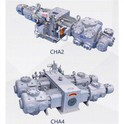
Natural gas hydraulic compressors play a crucial role in various industries, from oil and gas production to power generation. When it comes to choosing the right compressor for your specific needs, understanding the difference between single - stage and multi - stage natural gas hydraulic compressors is essential. As a trusted supplier of Natural Gas Hydraulic Compressors, I am here to shed light on these differences and help you make an informed decision.
Single - Stage Natural Gas Hydraulic Compressors
Single - stage natural gas hydraulic compressors are a simple and straightforward solution for many applications. In a single - stage compressor, the compression process occurs in one step. The gas is drawn into the compressor chamber and then compressed to the desired pressure in a single stroke or cycle.
Advantages
- Simplicity: One of the most significant advantages of single - stage compressors is their simplicity. With fewer components and a less complex design, they are generally easier to install, operate, and maintain. This simplicity also translates into lower initial costs, making them an attractive option for small - scale operations or applications with budget constraints.
- Compact Size: Single - stage compressors are typically more compact than their multi - stage counterparts. This makes them suitable for applications where space is limited, such as in mobile or portable gas compression units.
- Suitability for Low - Pressure Applications: Single - stage compressors are well - suited for applications that require relatively low compression ratios and pressures. For example, in some small - scale natural gas storage facilities or low - pressure gas transfer systems, a single - stage compressor can provide sufficient compression without the need for a more complex multi - stage setup.
Disadvantages
- Limited Pressure Capability: The main limitation of single - stage compressors is their limited ability to achieve high pressures. As the compression ratio increases, the temperature of the gas also rises significantly. This can lead to issues such as overheating, reduced efficiency, and potential damage to the compressor components. Therefore, single - stage compressors are not ideal for applications that require high - pressure compression, such as in natural gas pipeline transmission or high - pressure gas injection.
- Lower Efficiency at High Compression Ratios: At high compression ratios, the efficiency of single - stage compressors drops off rapidly. This is because a large amount of energy is wasted in the form of heat, and the compressor has to work harder to achieve the desired pressure. As a result, operating costs can be relatively high for applications with high compression requirements.
Multi - Stage Natural Gas Hydraulic Compressors
Multi - stage natural gas hydraulic compressors, on the other hand, divide the compression process into multiple steps or stages. Each stage compresses the gas to an intermediate pressure, and then the gas is cooled before entering the next stage. This multi - step approach offers several advantages over single - stage compressors.
Advantages
- High - Pressure Capability: The primary advantage of multi - stage compressors is their ability to achieve high pressures. By dividing the compression process into multiple stages, the temperature rise at each stage can be controlled, allowing for higher overall compression ratios. This makes multi - stage compressors suitable for applications such as natural gas pipeline transmission, where high pressures are required to transport the gas over long distances.
- Higher Efficiency: Multi - stage compressors are generally more efficient than single - stage compressors, especially at high compression ratios. The inter - cooling between stages reduces the temperature of the gas, which in turn reduces the work required for compression. This results in lower energy consumption and operating costs over the long term.
- Better Temperature Control: The inter - cooling process in multi - stage compressors helps to maintain a more stable and lower temperature throughout the compression process. This not only improves the efficiency of the compressor but also extends the lifespan of the compressor components by reducing the thermal stress on them.
Disadvantages
- Complexity and Higher Cost: Multi - stage compressors are more complex in design and require more components than single - stage compressors. This complexity translates into higher initial costs for purchase, installation, and maintenance. Additionally, the inter - cooling system adds to the overall cost and complexity of the compressor.
- Larger Footprint: Due to the additional components and the inter - cooling system, multi - stage compressors are typically larger in size than single - stage compressors. This can be a drawback for applications where space is limited.
Applications and Considerations
The choice between single - stage and multi - stage natural gas hydraulic compressors depends on several factors, including the required pressure, flow rate, operating conditions, and budget.
- Low - Pressure Applications: For applications that require relatively low pressures, such as small - scale gas storage or low - pressure gas transfer, a single - stage compressor may be the most cost - effective option. Its simplicity and compact size make it easy to install and operate, and it can provide sufficient compression for these types of applications.
- High - Pressure Applications: In applications that require high pressures, such as natural gas pipeline transmission or high - pressure gas injection, a multi - stage compressor is usually the better choice. Its ability to achieve high compression ratios and maintain efficiency at high pressures makes it suitable for these demanding applications.
- Flow Rate Considerations: The flow rate of the gas also plays a role in the compressor selection. In general, multi - stage compressors can handle higher flow rates more efficiently than single - stage compressors, especially at high pressures. However, for applications with low flow rates, a single - stage compressor may be sufficient.
Related Compressor Products
In addition to single - stage and multi - stage natural gas hydraulic compressors, we also offer a range of other compressor products, including Gas Screw Compressor and Gas Reciprocating Compressor. Gas screw compressors are known for their smooth operation, high efficiency, and low maintenance requirements. They are suitable for a wide range of applications, from industrial gas compression to natural gas processing. You can also visit our Gas Screw Compressor factory to learn more about our manufacturing process and quality control measures.
Conclusion
In conclusion, the difference between single - stage and multi - stage natural gas hydraulic compressors lies in their design, performance, and suitability for different applications. Single - stage compressors are simple, compact, and cost - effective for low - pressure applications, while multi - stage compressors offer high - pressure capability, higher efficiency, and better temperature control for more demanding applications. As a professional Natural Gas Hydraulic Compressor supplier, we can help you choose the right compressor for your specific needs. Whether you require a single - stage compressor for a small - scale project or a multi - stage compressor for a large - scale industrial application, we have the expertise and products to meet your requirements.


If you are interested in learning more about our natural gas hydraulic compressors or would like to discuss your specific needs, please feel free to contact us for a detailed consultation. We look forward to working with you to find the best compression solution for your business.
References
- Compressor Handbook, Edited by Ian S. Hall, Elsevier
- Natural Gas Engineering Handbook, Edited by John Carr, Gulf Professional Publishing